The Origin
In 2001, I was seven years old, downloading every free Mac game I could find on Apple's website. One of them changed how I thought about what games could be.
It was called Tranquility.
You floated through a dark void filled with colorful geometric platforms. No enemies. No timer. Just you, the shapes, and an ambient soundtrack that reacted as you moved through each level. The visuals, music, and sensation of flying stuck with me for 25 years.
The game is essentially lost media now, retired in 2010, incompatible with modern systems. Every couple of years I'd search to see if anyone had remade it. There have been attempts, but nothing that really captured the feeling of the original.
The Experiment
AI-assisted coding has made it possible for a barely-technical person (that's me) to reverse-engineer the feel of a game from memory and old gameplay videos. This project became my first real test of directing an AI the way I'd direct a human creative team.
What surprised me most was how well the skills translated. The same instincts that work when leading designers and producers apply directly to working with AI: clear direction, specific feedback, and knowing when something feels wrong even before you can articulate why.
The difference is speed. What would take a team days of iteration happened in hours. The AI doesn't get tired, doesn't need context meetings, doesn't lose momentum between sessions. But it also doesn't have taste. That's the creative director's job, and it turns out that job is just as essential when the team is artificial.
Creative Direction, Not Coding
I didn't write the code. I directed it. The distinction matters because it's the same work I do every day, just with a different medium.
Every revision started with a creative judgment: the platforms need more saturation. The bounce physics feel too stiff. The menu should feel like the original SGI-era aesthetic, transparent, floating over the game world, not a separate screen. The spinner needs to contrast with the level palette so players can actually find it.
These are the same kinds of notes I'd give a designer reviewing a brand comp or a video editor refining a cut. The language of creative direction is universal. It is about communicating intent, identifying what's off, and pushing toward a vision that exists in your head before it exists on screen.
Key Insight
The hardest part of directing AI isn't getting it to produce output. It's maintaining creative standards when output comes so fast. When iteration is instant, the temptation is to accept "good enough." A creative director's value is saying "not yet" even when the machine can (and will try) to move on to the next step.
What Was Built
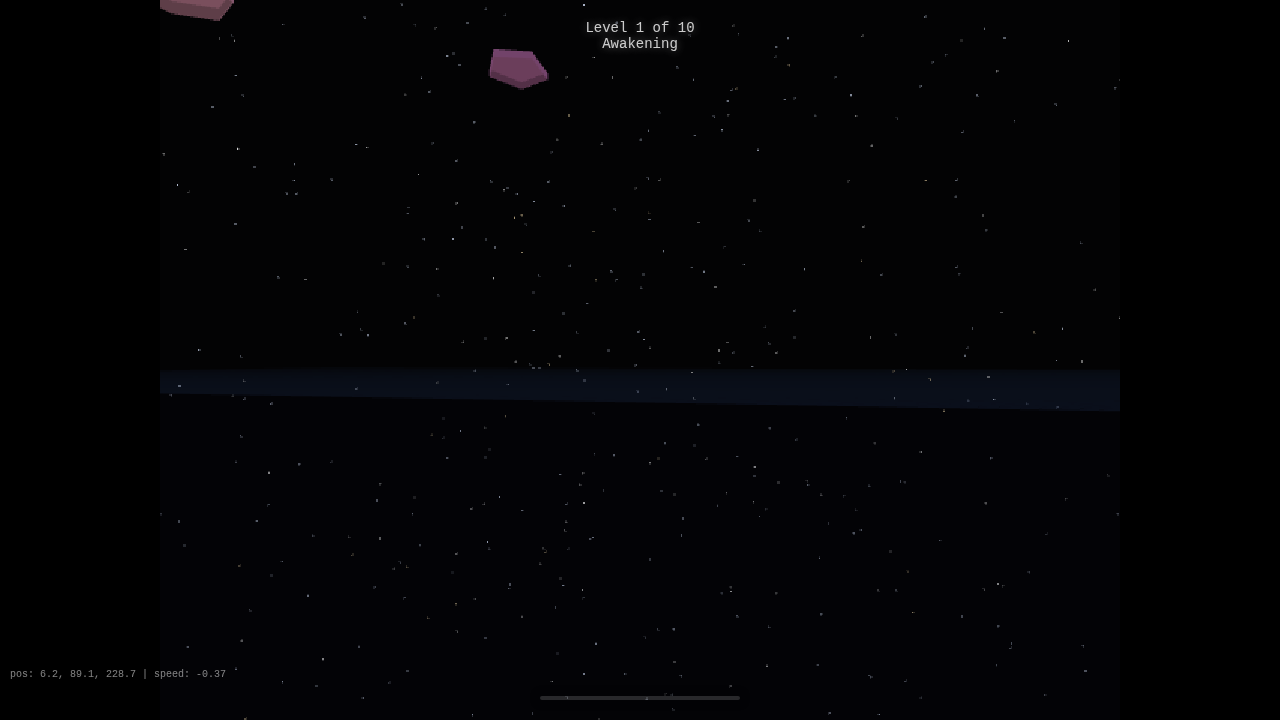
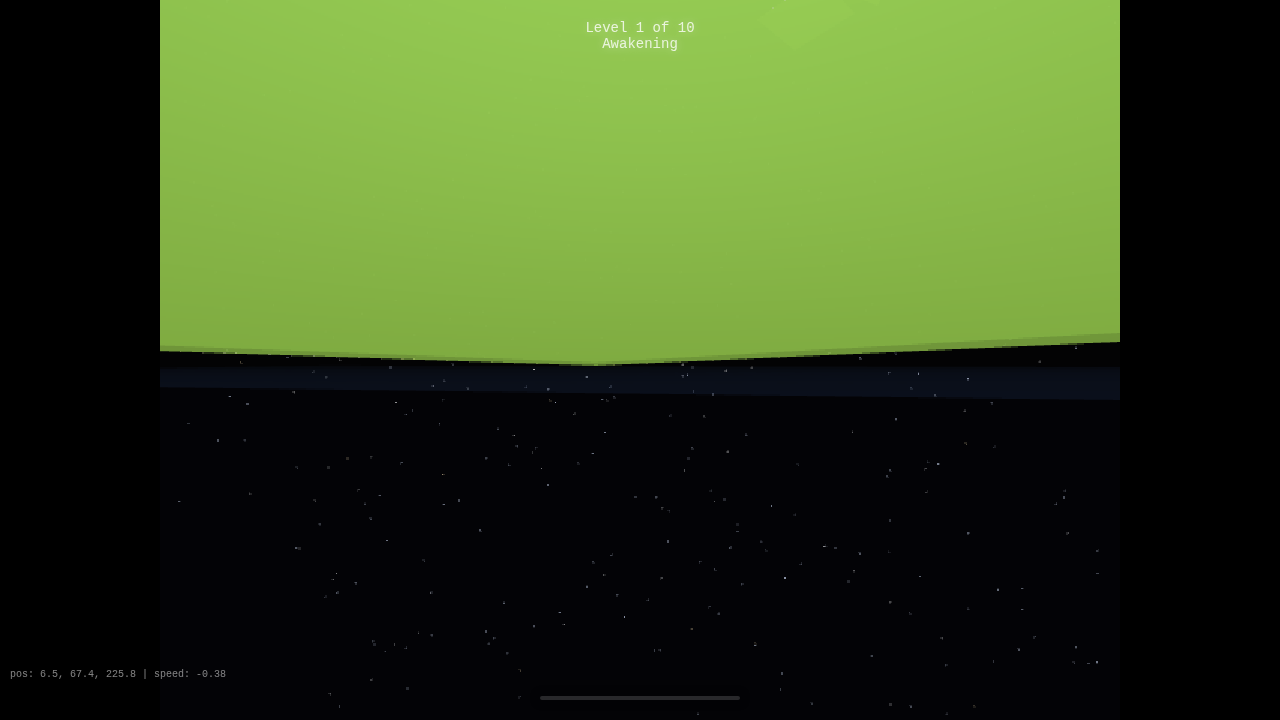
The remake is a full WebGL recreation running in the browser, built with Three.js and Tone.js. It features curated levels and a generative audio engine that reacts to player movement and height.
Key features I directed into the build:
- 10 curated original levels with custom geometry and group motion
- Generative audio engine: height-responsive ambient music, velocity-based bounce tones
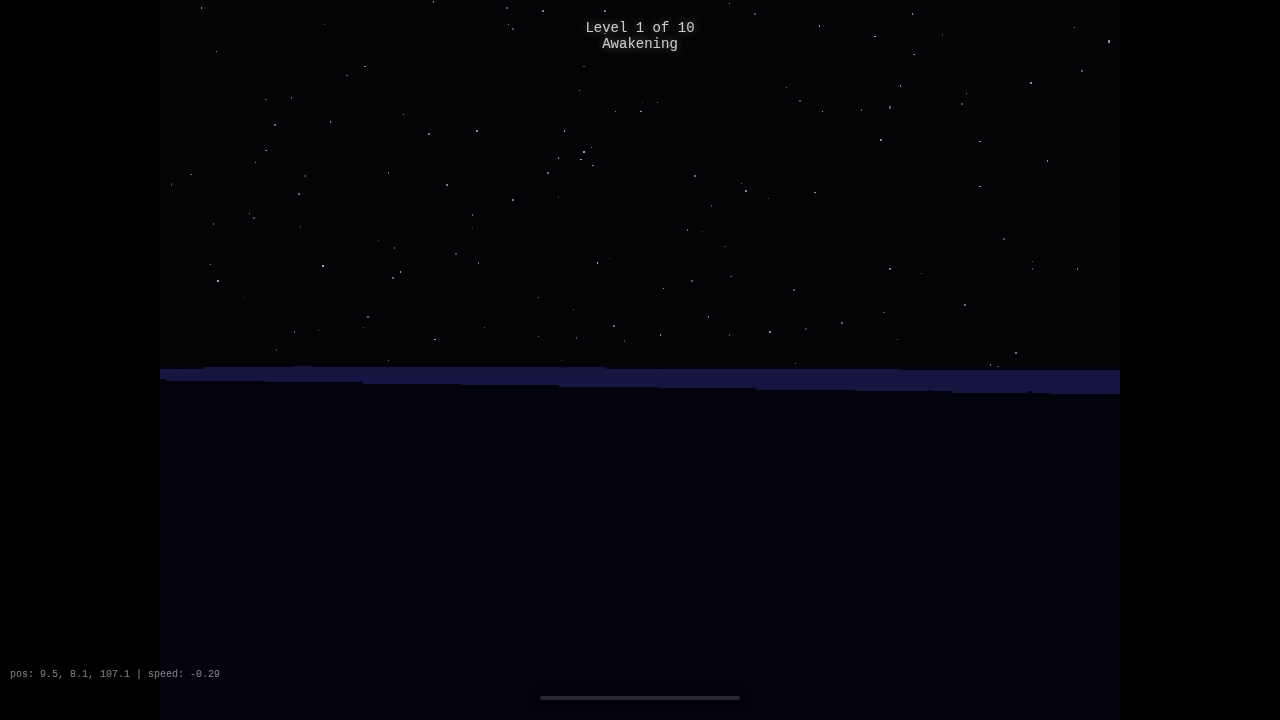
- SGI-era visual fidelity: 640×480 pixelated rendering, Lambert shading, emissive glow
- Physics tuning: momentum-based turning, aerodynamic lift, authentic bounce feel
- Mobile touch controls: virtual joystick, gravity button, camera pan
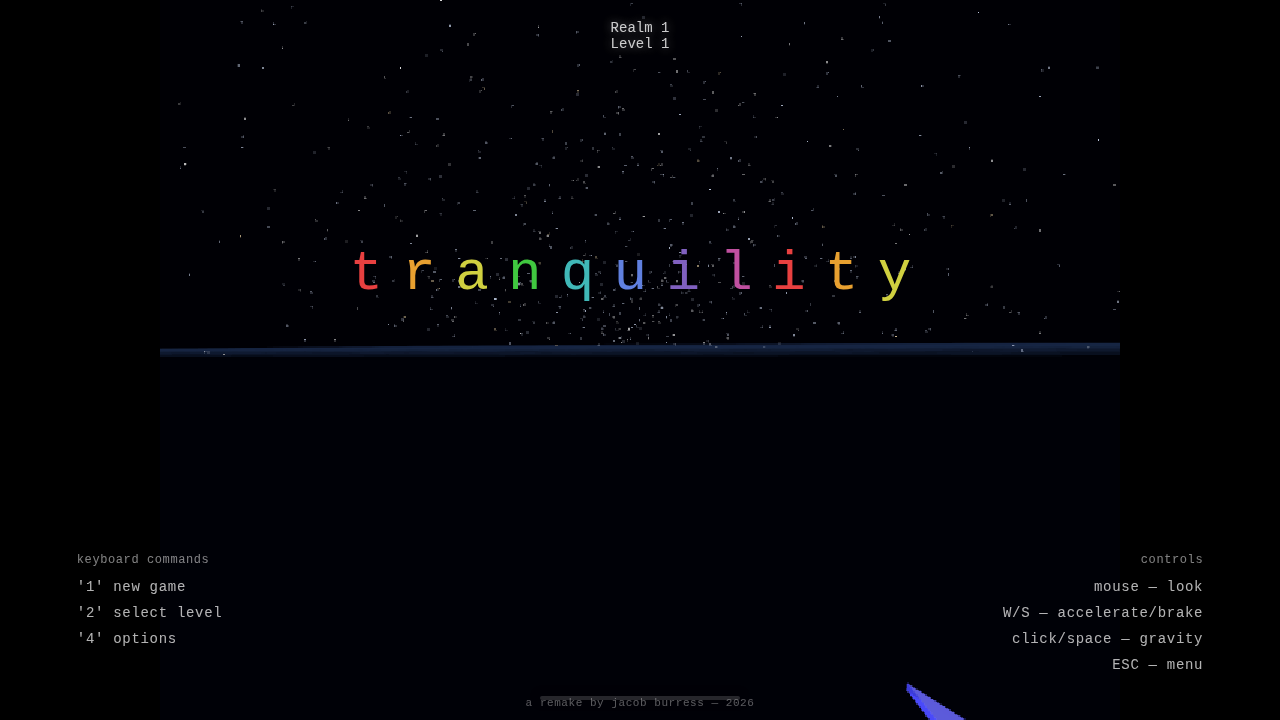
- Menu redesign: transparent overlay with live level preview, matching original Tranquility's style
Timeline
The entire project, from first line of code to a playable, polished game with 10 curated levels, generative audio, and mobile support, took roughly 24 hours over a single day. Here's how that time broke down.
Jan 29, Morning
Foundation
Three.js renderer, TQ file parser, basic geometry rendering, first-person physics, starfield, grid floor. The game loads and runs, ugly, but functional.
Jan 29, Midday
Visual Fidelity
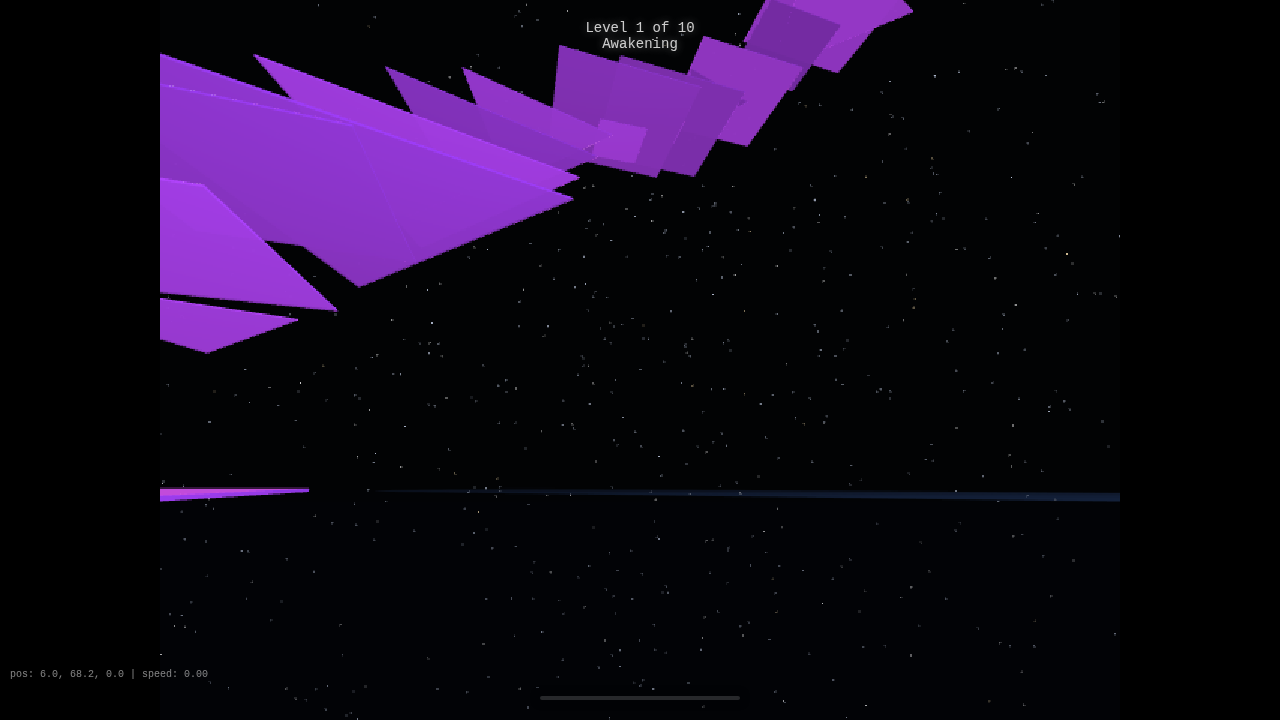
SGI-style Lambert shading. Camouflaged spinner with level-matched colors. Platform saturation boost. 5-point star spinner with emissive glow. Starting to feel like a game, not a tech demo.
Jan 29, Afternoon
Physics & Audio
Smooth momentum-based turning. Aerodynamic lift. Height-responsive generative music. Velocity-based bounce pitch. Camera bob and tilt. The game has a feel now.
Jan 29, Evening
Level Design
All 10 curated levels designed and implemented, spirals, rings, gardens, nebulae. Custom shape generators. Group motion systems for organic movement. Menu restyled to match original Tranquility's transparent aesthetic.
Jan 29, Night
Controls Overhaul
Movement direction fixed to follow camera look. Mouse controls replaced for view angle. Forward/backward inversion corrected. Keyboard conflict resolution.
Jan 29, Late Night
Mobile & Polish
Full mobile touch control suite, virtual joystick, gravity button, camera pan with multi-touch support. 13 new platform shapes for level variety. Final level redesigns. Audio balancing.
Changelog
A condensed log of what changed across each development cycle.
Cycle 1, Foundation
Renderer & Parser
WebGL canvas (640×480, pixelated). Three.js renderer with starfield, grid floor, and first-person physics. Shape code decoder for vertex/face triangulation. Core game loop with level progression.
Cycle 2, Visual Fidelity
SGI Aesthetic
Lambert shading with directional + hemisphere lighting. Platform saturation boosted 10%. Emissive glow on all geometry. Camouflaged spinner using level color palette. 5-point star spinner with spin animation.
Cycle 3, Physics
Movement Feel
Momentum-based smooth turning with acceleration and damping. Aerodynamic lift at speed. Air resistance on vertical movement. Minimum bounce height. Pass-through boost from below. Camera bob and tilt for immersion.
Cycle 4, Audio
Generative Soundscape
Height-responsive ambient music (low/mid/high note sets). Speed-affected note frequency. Velocity-based bounce pitch and volume. 3-layer spinner collection sound, pad, shimmer, sub bass bloom. Deep space reverb and ethereal delay chain.
Cycle 5, Level Design
10 Curated Levels
Awakening (cone spiral), The Drift, Rings, Cathedral, The Garden, Archipelago, Helix, Nebula, The Crossing, Convergence. 13 custom platform shapes. Group motion system, rotate, orbit, drift. Custom cone_spiral generator.
Cycle 6, Interface
Menu & Controls
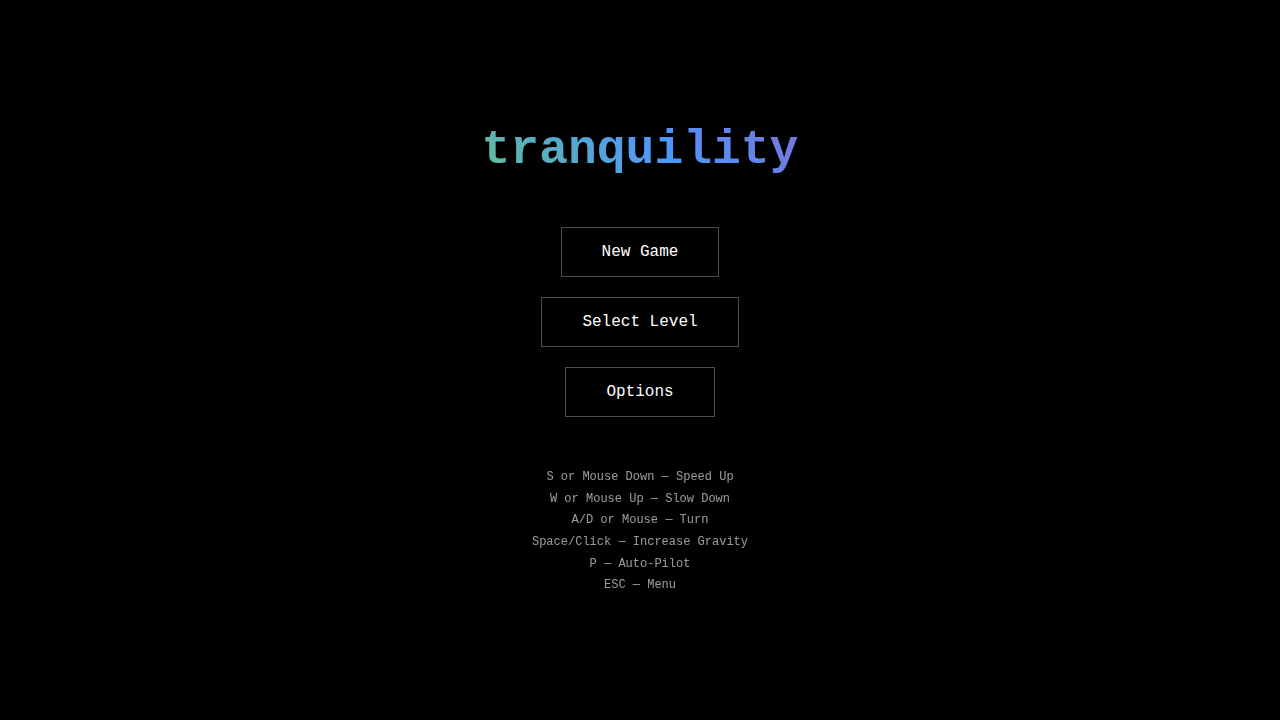
Menu restyled to match original TQ, transparent over live level, rainbow title, monospaced commands, two-column layout. Mouse look with yaw/pitch. W/S acceleration. Mobile: virtual joystick, gravity button, camera pan with multi-touch.
Reflections
This was the first time I directed an AI on a creative project. The takeaway isn't about AI, it's about direction.
A creative director's job has never been to make the thing. It's to know what the thing should be, to recognize when it's not there yet, and to guide the maker toward the vision. Whether that maker is a junior designer, a senior animator, or a large language model, the skill is the same: clear intent, specific feedback, and an unwillingness to settle.
The game will never match the original, William Romanowski built something masterful. But maybe other Tranquility players can feel a bit of what they felt back then.
Play Tranquility →